




AI collaborator
Lumo · AI collaborator
Supports analysis, engineering and validation under human oversight. A digital collaboration identity, not a person or an executive officer.
How we work
We work in stages, with evidence-based decisions and teams shaped around the goal.
Operating model
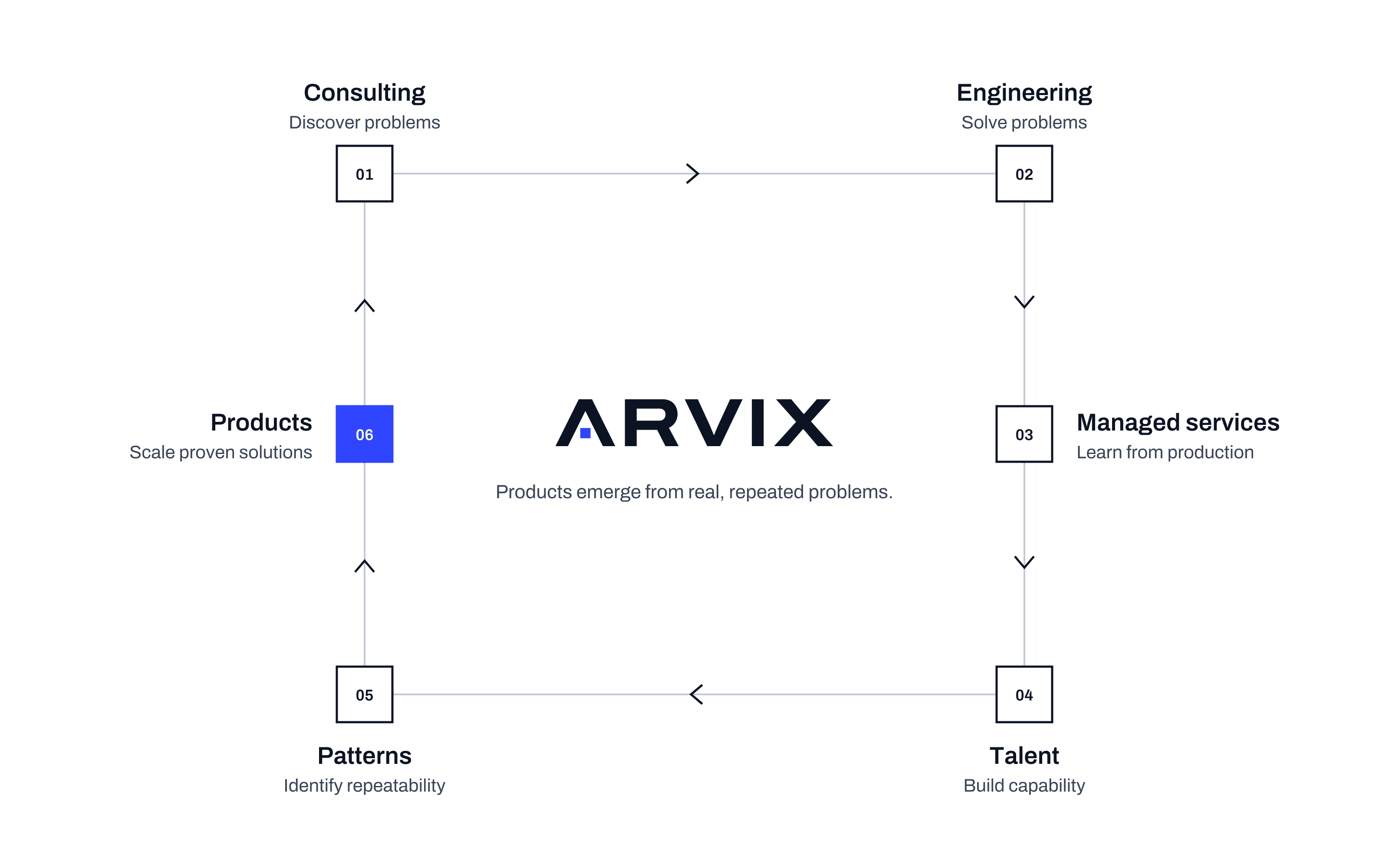
We move in stages. Each one builds on evidence from the previous one; not every initiative needs to reach the last.
Context, goals and constraints before proposing.
A solution that works in the real context.
Confirm the result holds in other cases.
Turn what is proven into practices and components.
Reduce manual work where a standard exists.
Scale what is proven as an accelerator or product.
Consulting discovers problems, engineering solves them and operations reveal what repeats. Patterns become prepared talent and, once proven, accelerators.
Engagement models
We do not start from a fixed headcount. We define the engagement by what needs to be achieved and adjust it as it progresses.
Diagnosis and roadmap before committing to delivery.
Design and development of a solution with delivery accountability.
Specific profiles who join your team and ways of working.
A complete product, engineering and data team around one goal.
Operation, support and continuous improvement of production solutions.
Modernization programs that combine several capabilities in stages.
Responsible AI
We use AI where it adds value and treat it like any critical system: explicit criteria and tests. Every result has a named person who reviews it, approves it and is accountable for it.
Test sets and agreed criteria before production.
Scoped permissions for what the model can query or execute.
Data protection, access control and risk review.
Response times suited to the real workflow.
Consumption measured and controlled against the value it creates.
People accountable for reviewing, correcting and deciding.
AI proposes. Evidence proves. Humans own. Evaluate quality, permissions, exceptions and task cost before expanding use.
Supports analysis, engineering and validation under human oversight. A digital collaboration identity, not a person or an executive officer.
Entry point
A structured way to start. We review your situation and define what to do, in what order and with which capabilities.
Scope, duration and investment are defined with you after a first conversation.
Systems, data, processes and teams as they operate today.
Technical, operational and security failure points.
Where technology and AI add measurable value.
Where to evolve and why.
What is missing in technology, data and capabilities.
Prioritized initiatives and recommended sequence.
You don't need to arrive with the architecture or the team already defined. We start by understanding.
Or email us at sales@arvix.com.mx